brown.png)
About
This project was a Communication Merchandise Case Study, done as part of a group assignment for our Interacting in the Workplace class. The main goal was to create merchandise for the Department of Psychology that focused on the theme of communication.
We were given the project during our Tuesday class, and Thursday's class was used for getting feedback from our teacher and classmates. We had to finalize everything and submit it by the following Tuesday. So technically we had a week—but with all the other assignments from different classes, it felt like a lot less time.
Roles
My specific role was to design two mugs and a pen that had a small pull-out banner inside it.

The Challenge
The biggest challenge for me was trying to meet the client's expectations in such a short amount of time. Even though we had about a week, that didn't include the time we had to spend on other schoolwork and group projects, so it was a tight schedule. Plus, we only had two chances to get feedback from the teacher, and unfortunately, she isn't always reliable when it comes to answering student questions outside of class. The merchandise we created was meant for everyone in the Psychology Department (students, faculty, and staff) so it needed to be relatable, easy to use, and communicate a clear message about connection and interaction.
The Research
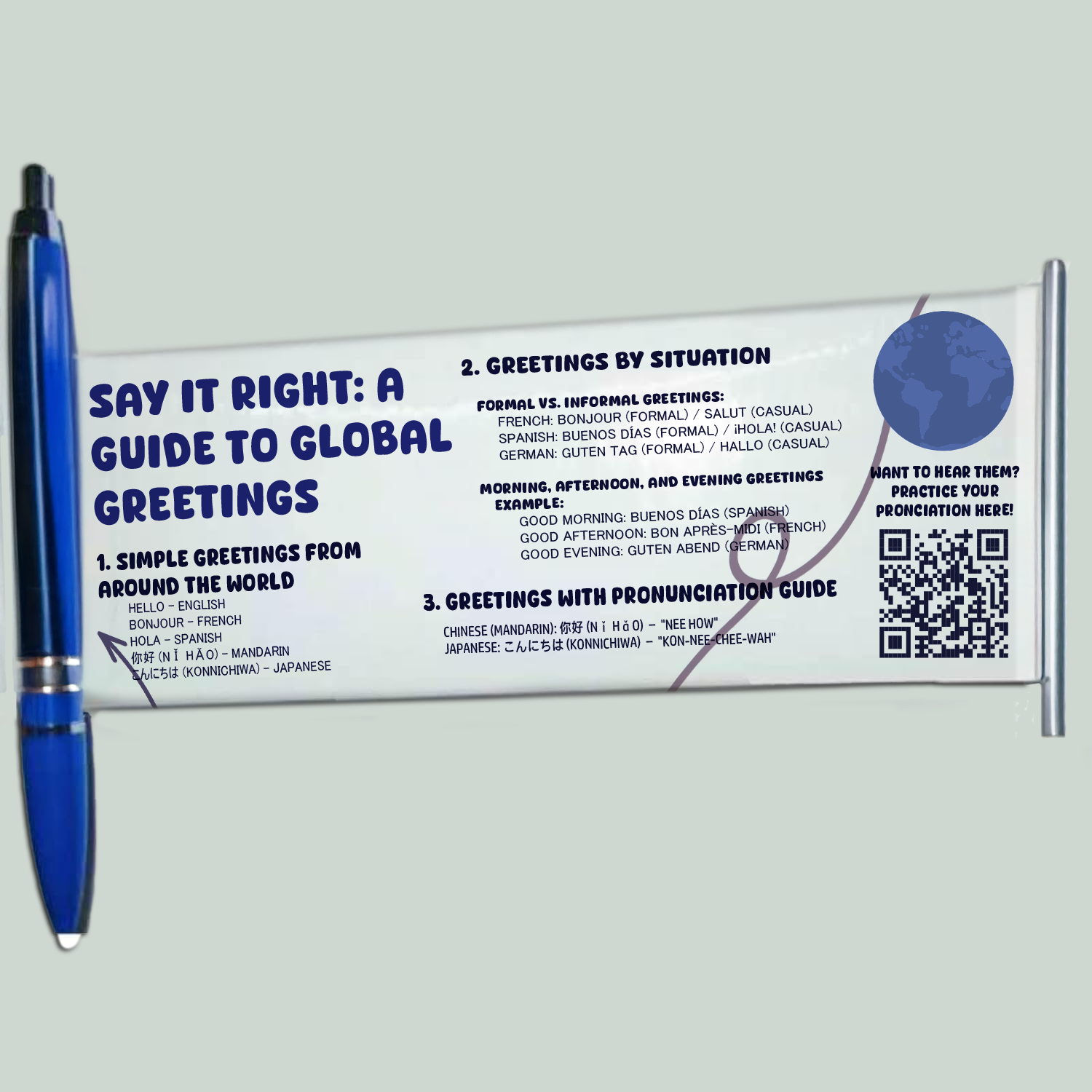
For research, I started by looking up how people greet each other in different languages. I also read a few short articles about communication styles and the psychology behind human interaction. I wanted to make sure the designs were not just cute, but meaningful too. One of the mugs includes a personal touch—something that reflects how I personally view communication and connection.
Overall, my inspiration was a mix of global perspectives, a little research, and my own creative spin. I tried to make the merchandise feel both thoughtful and playful.
Design Process
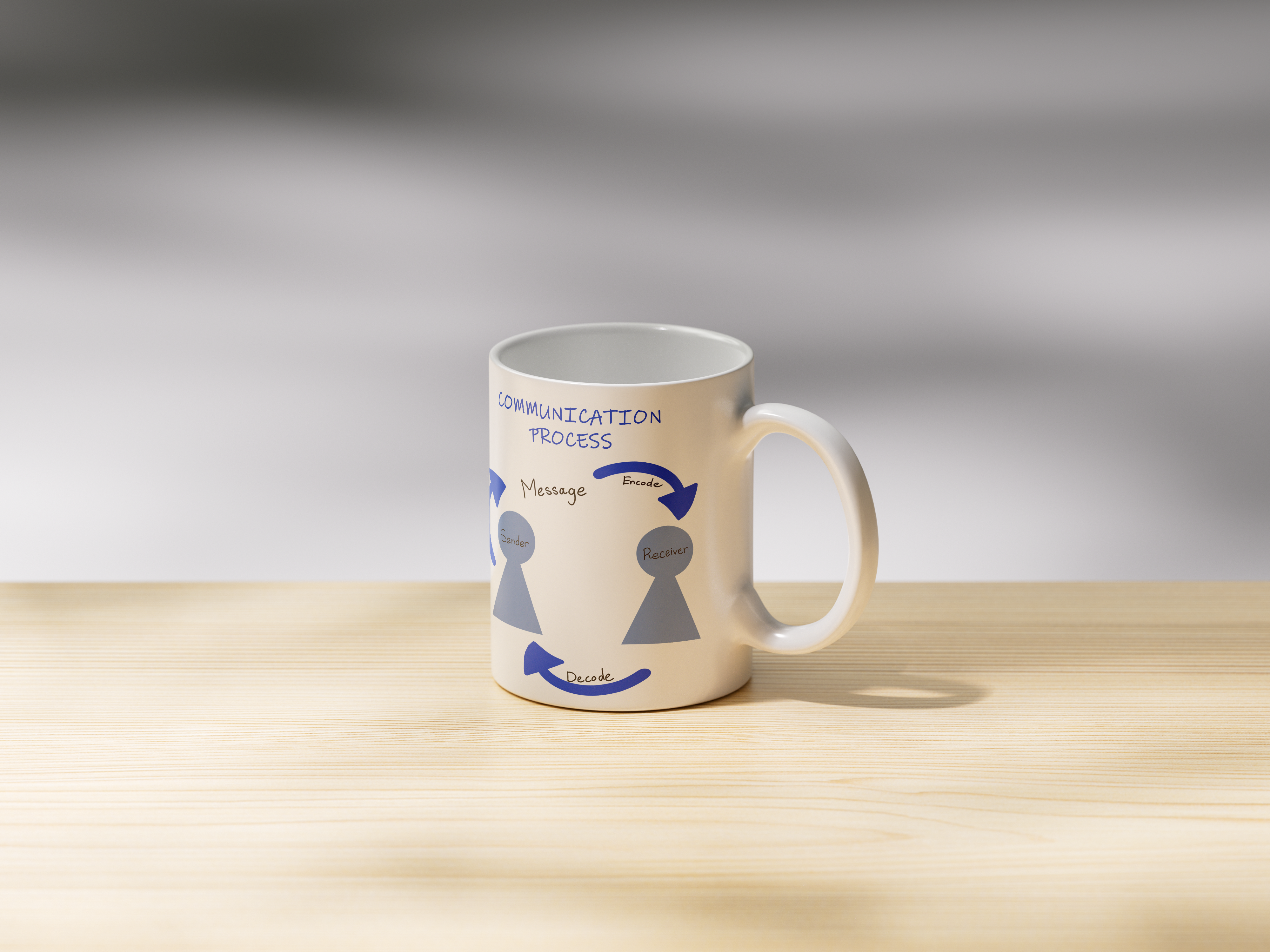
At first, one of the mug designs I made got some criticism from the teacher for being a bit too plain.
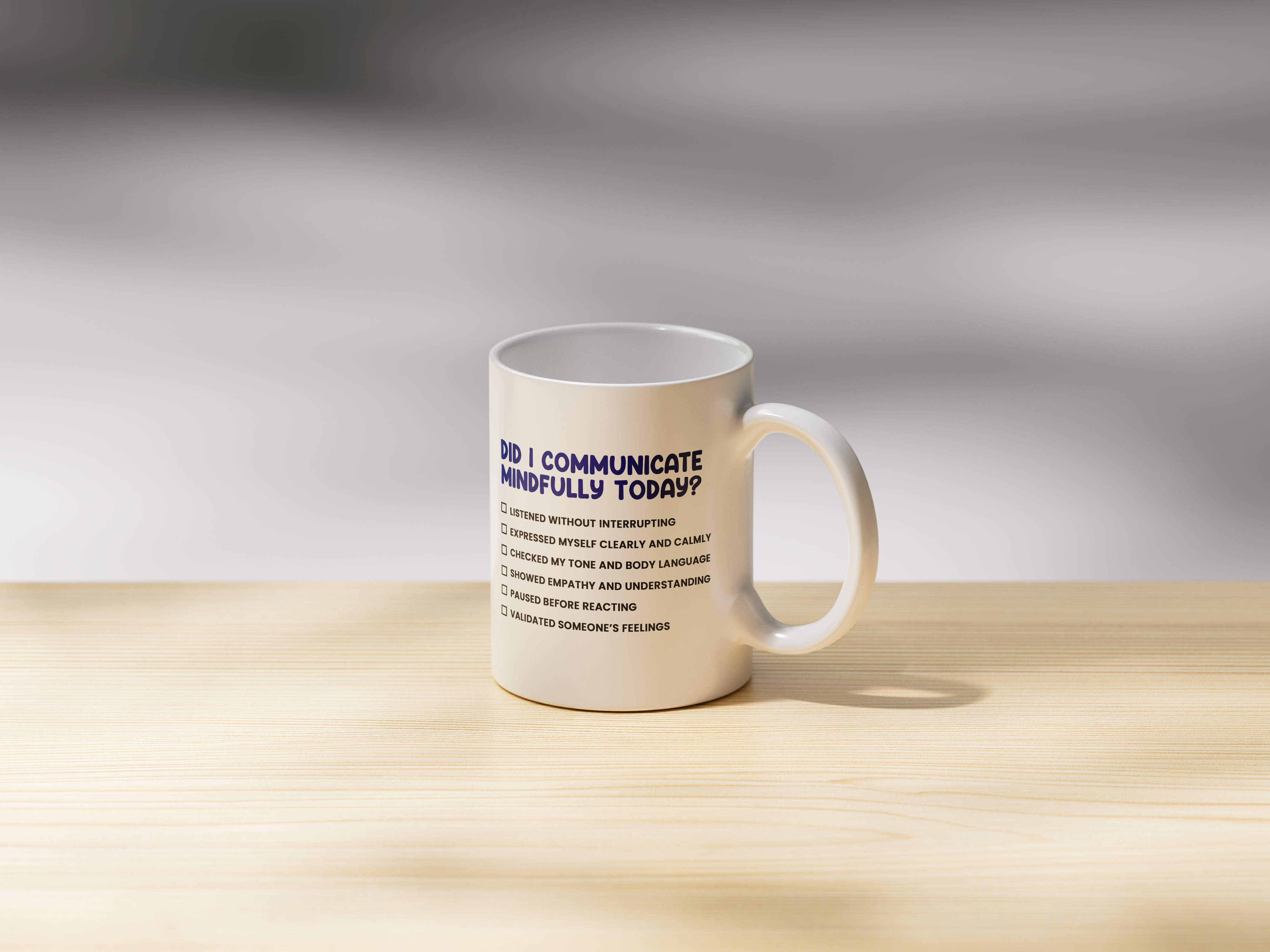
So I took that feedback and switched the design into a checklist-style layout. The idea was to make something not only visually appealing but also practical—something that could help the person using it remember their daily social or mental wellness goals.
For the design tools, I used Photoshop to create the mockups and handle layout and formatting. I also used Adobe Fresco for hand-drawing some of the illustrations on one of the mugs. My focus throughout the design process was to keep things clean, easy to read, and visually pleasing, while still sticking to the communication theme.
Final Product
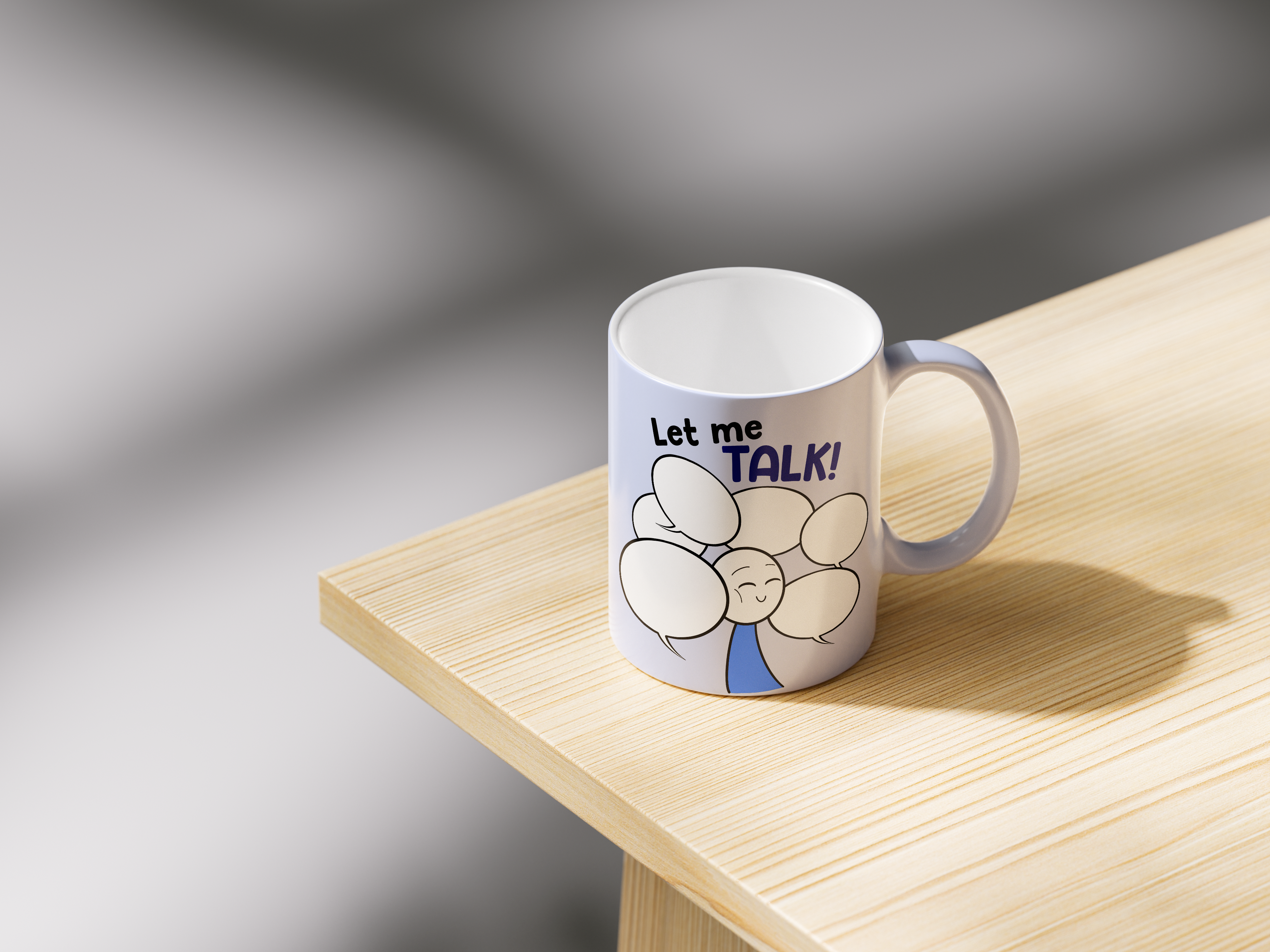
The final merchandise included two mugs and one pen with a hidden banner inside. One mug had a simple yet colorful checklist that encouraged daily social interaction goals—like. The second mug had a design for those who always get interrupted when talking. The pen had a mini pull-out banner that read featured greetings in different languages, symbolizing global communication and inclusivity.
Each item was designed to be something people could actually use while also carrying a message. I wanted the merchandise to be both fun and functional.
Results & Impact
This project helped me get better at organizing my time and prioritizing what needed to get done, especially with other assignments happening at the same time. I found that working from the library or a local café really helped me stay focused. I also learned how to take feedback and quickly turn it into something useful without overthinking it.
On top of all that, I realized how important it is to balance creativity with practicality. I had to make sure the items looked good but were also easy to understand and relevant to the audience. The feedback from classmates was positive, and I felt like I successfully created something that communicated a message while still being visually appealing.
Conclusion
This project really helped me tap into my creative side while pushing me to design with a purpose. It wasn't just about making something look good—it was about creating merchandise that communicates something valuable in an everyday, relatable way.
It challenged me to think about what makes design meaningful and how to connect with an audience through visuals. I walked away with stronger time management skills, more confidence in my design choices, and a better understanding of how to bring a concept to life from start to finish.